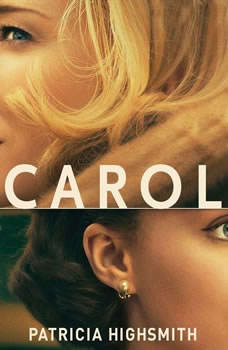
The act of mindfulness is about observance and awareness. It’s a meditative practice that attunes us to our body and our surroundings and helps to ground us in the present moment. You can practice mindfulness by sitting still and watching your breath, or by taking time to notice little things in your world, how a garden is growing, how sunlight reflects off the tele, or how steam whispers out of a teacup. This slowed down, compassionate approach to human thought is championed as a key combatant against mental health problems like anxiety and depression. Nowadays, there are thousands upon thousands of self-help books that preach mindfulness and provide comprehensive guides for how to pursue it, but no text seems to completely embody the concept as much as Patricia Highsmith’s spellbinding queer romance novel, Carol, even though it does so by quite wonderful accident.
Highsmith as a writer has always had an exceptional eye for detail. Perhaps her best known work, The Talented Mr. Ripley features a paragraph that extensively describes the process of trying on hats, and it’s somehow one of the most breathtaking passages in the history of literature. Throughout the novel, Highsmith demonstrates an astute awareness of the rooms her characters are in. She pours life into each microcosmic setting, while still maintaining the story’s free-flowing, page-turning feel. But Carol, diverting from the crime thriller world of Ripley, is under no obligation to provide such rapidity. Carol is a love story, a touching and brave exploration of womanly yearning and sacrifice.
Due to its overtly lesbian focus, it was originally published under the pseudonym Claire Morgan as The Price of Salt. We follow Therese, an aspiring theatre set designer temping in a toy store. During the Christmas rush, she assists an elegant, blonde woman in picking out a doll for her daughter. The woman’s essence captures Therese instantly. She stirs something in her that had been sleeping her whole life. And suddenly the whole world is awake. The woman is Carol, and their world is 1950s New York City, a world as brimming with light as it is with prejudice.
The novel deserves huge credit alone for being a prominent torchbearer for LGBT+ fiction. These two powerful, queer women are beautifully written, each with their own delicately crafted perfections and imperfections. They are an unequivocal joy to read. However, the larger romance on display across these pages is a joyful, furious, overflowing romance with everyday life. Highsmith shows a fascination with all the ebbs and flows of the human experience, every person you meet, every chin dimple, everything down to the way someone slices their toast. Her New York is love incarnate. There is an unstoppable buzz thriving beneath her buildings and her cocktail parties. In every moment, there is something to observe, curiously and affectionately.
As such, the book transcends its bounds as a work of literature, and becomes a real physical totem of mindfulness. There is no sentence that isn’t charged with pure, honest and observant emotion. The writing is so simplistically beautiful that it demands to be stewed over and savoured, whether it be in descriptions of designer coats or in the delectably lush dialogue of the people wearing them. With all this emotive detail, each page draws us into the present moment, both of the book’s world and of ours. Each page feels like a little life in our hands, to the extent that we begin to notice the shift of weight in our palms as we turn each page over from right to left. And as my bookmark moved through the book at a snail’s pace, I began noticing myself noticing so much more every time I stepped out into the world. I saw pylons turning to shadows of pylons in the evening. I realised how a pigeon smacks its breast with its wings two times before taking off on the third beat. It was Carol that made me realise it. It was Carol that opened the door to mindfulness.
And so here we have a story that is so precious and so impactful, that it brings all the world’s other stories out of the woodwork. A story that brings nervous, excited, utterly infatuated jitters to even the stillest moments, at the centre of which lies an enchanted, cathartic bliss.
Due to its overtly lesbian focus, it was originally published under the pseudonym Claire Morgan as The Price of Salt. We follow Therese, an aspiring theatre set designer temping in a toy store. During the Christmas rush, she assists an elegant, blonde woman in picking out a doll for her daughter. The woman’s essence captures Therese instantly. She stirs something in her that had been sleeping her whole life. And suddenly the whole world is awake. The woman is Carol, and their world is 1950s New York City, a world as brimming with light as it is with prejudice.
The novel deserves huge credit alone for being a prominent torchbearer for LGBT+ fiction. These two powerful, queer women are beautifully written, each with their own delicately crafted perfections and imperfections. They are an unequivocal joy to read. However, the larger romance on display across these pages is a joyful, furious, overflowing romance with everyday life. Highsmith shows a fascination with all the ebbs and flows of the human experience, every person you meet, every chin dimple, everything down to the way someone slices their toast. Her New York is love incarnate. There is an unstoppable buzz thriving beneath her buildings and her cocktail parties. In every moment, there is something to observe, curiously and affectionately.
As such, the book transcends its bounds as a work of literature, and becomes a real physical totem of mindfulness. There is no sentence that isn’t charged with pure, honest and observant emotion. The writing is so simplistically beautiful that it demands to be stewed over and savoured, whether it be in descriptions of designer coats or in the delectably lush dialogue of the people wearing them. With all this emotive detail, each page draws us into the present moment, both of the book’s world and of ours. Each page feels like a little life in our hands, to the extent that we begin to notice the shift of weight in our palms as we turn each page over from right to left. And as my bookmark moved through the book at a snail’s pace, I began noticing myself noticing so much more every time I stepped out into the world. I saw pylons turning to shadows of pylons in the evening. I realised how a pigeon smacks its breast with its wings two times before taking off on the third beat. It was Carol that made me realise it. It was Carol that opened the door to mindfulness.
And so here we have a story that is so precious and so impactful, that it brings all the world’s other stories out of the woodwork. A story that brings nervous, excited, utterly infatuated jitters to even the stillest moments, at the centre of which lies an enchanted, cathartic bliss.
review written by Alex George
 RSS Feed